
A packaging line runs thousands of identical cartons each shift. The first hundred boxes fold perfectly, but by the five hundredth box, something shifts. The fold lines drift slightly. Glue application misses the target zone. Operators stop the line, recalibrate mechanical stops, and restart production with fresh waste sheets. This pattern of gradual misalignment frustrates packaging manufacturers worldwide. Traditional folding technology uses a central drive shaft connected by gears, belts, and linkages to every folding station on the machine. As components wear or temperature changes cause metal expansion, the mechanical connection loses synchronization between stations. How does servo-driven folding technology improve precision on a modern Box Folder Gluer Machine, and why does this matter for high-volume packaging operations?
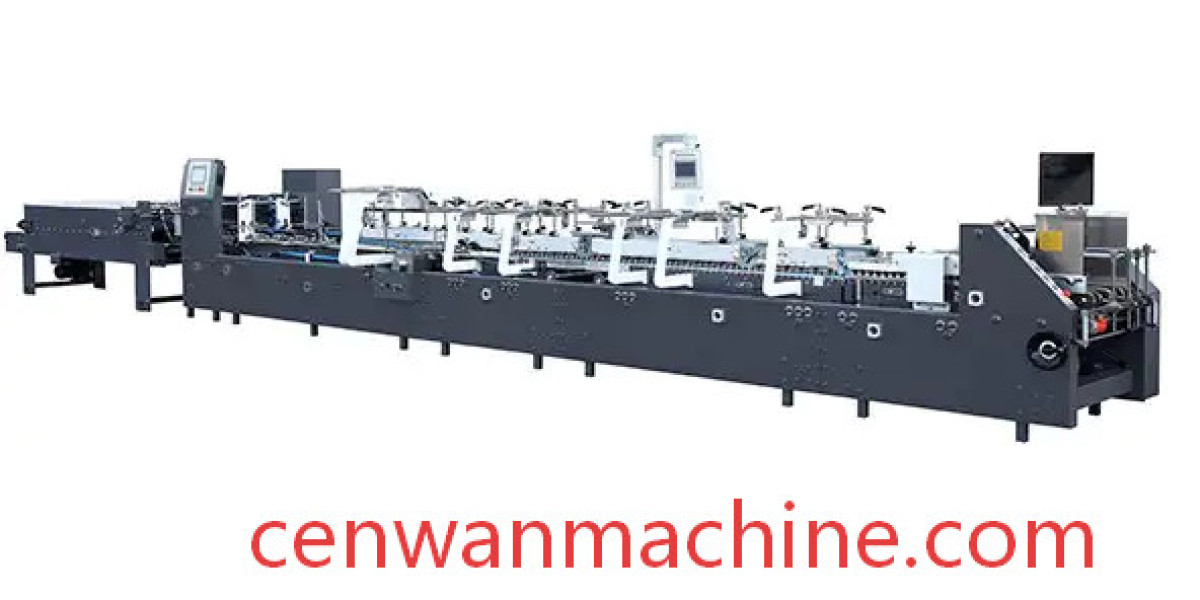
The engineering team at cenwanmachine, operated by Zhejiang Chengwang Intelligent Packaging Equipment Co., Ltd., has replaced mechanical shafts with independent servo motors at each key station. A conventional machine uses one large motor turning a long shaft. Gears along that shaft transfer power to folding belts, folding plates, and glue applicators. Any slack in a single gear affects every downstream station. Servo-driven architecture removes this dependency. Each station receives its own motor with a dedicated encoder. The central computer tells each motor exactly when to start, how fast to turn, and precisely when to stop. This independent control means a folding belt on the left side of the machine matches the belt on the right side within a fraction of a millimeter, shift after shift.
The precision advantage becomes visible on complex carton styles like lock-bottom or multi-corner boxes. These designs require multiple folds to occur simultaneously from different angles. A traditional machine uses cams and linkages to coordinate these movements. Cams wear down. Linkage pins develop play. The folding timing drifts over weeks or months of operation. Servo-driven systems maintain timing indefinitely because the computer remembers exact motor positions and repeats them identically for every cycle. Chengwang's implementation includes closed-loop feedback, where each motor reports its actual position back to the computer hundreds of times per second. If a motor encounters resistance from a thick board, the system compensates instantly rather than allowing a mis-fold.
Changeover time between job sizes reveals another servo advantage. A traditional machine requires an operator with wrenches to loosen bolts, slide folding sections along rails, and retighten everything. This process takes thirty minutes or longer for complex changeovers. Experienced operators may adjust the same station three or four times before achieving acceptable fold quality. Servo-driven machines automate most of this process. The operator enters the new carton dimensions into the touchscreen. Motors move folding sections to programmed positions automatically. Setup completes in minutes rather than hours. cenwanmachine stores these settings for hundreds of job recipes, allowing repeat orders to run with identical fold quality months or years apart.
Energy efficiency and noise reduction accompany servo adoption. Mechanical drive systems waste energy through friction in gears and bearings. A central motor running continuously consumes power even when the line runs empty. Servo motors only draw current when moving. They hold position with zero energy consumption between cycles. The elimination of gearboxes and long drive shafts also reduces factory noise. Operators work near a servo-driven box folder gluer machine without the constant whine of mechanical drives. This quieter operation improves workplace communication and reduces fatigue during long shifts.
The durability argument favors servo systems over mechanical alternatives. Gears develop backlash. Belts stretch. Chains elongate. Each of these wear mechanisms degrades folding precision gradually until an operator notices defective boxes and stops the line. Servo motors contain no wearing friction components in their closed-loop control path. The encoder and motor windings function identically on day one thousand as on day one. Chengwang's servo-driven folder gluers carry CE and ISO9001 certifications, confirming consistent manufacturing quality. The company's ten-plus years of engineering experience in Wenzhou, China, has refined this servo integration across installations in over forty countries.
For packaging manufacturers struggling with inconsistent fold quality on long runs or complex box styles, the solution requires examining drive technology rather than blaming operator skill. The specific servo-driven machine platform demonstrating this precision advantage appears at https://www.cenwanmachine.com/product/folder-gluer-for-stereo-box/, where independent motor control transforms folding accuracy for rigid and stereo box production. A servo-driven box folder gluer machine maintains alignment from the first box of the morning to the last box before shift change. The final question for any packaging production manager remains practical: does your current folding system drift throughout the day, or does it hold precision until you choose to stop?