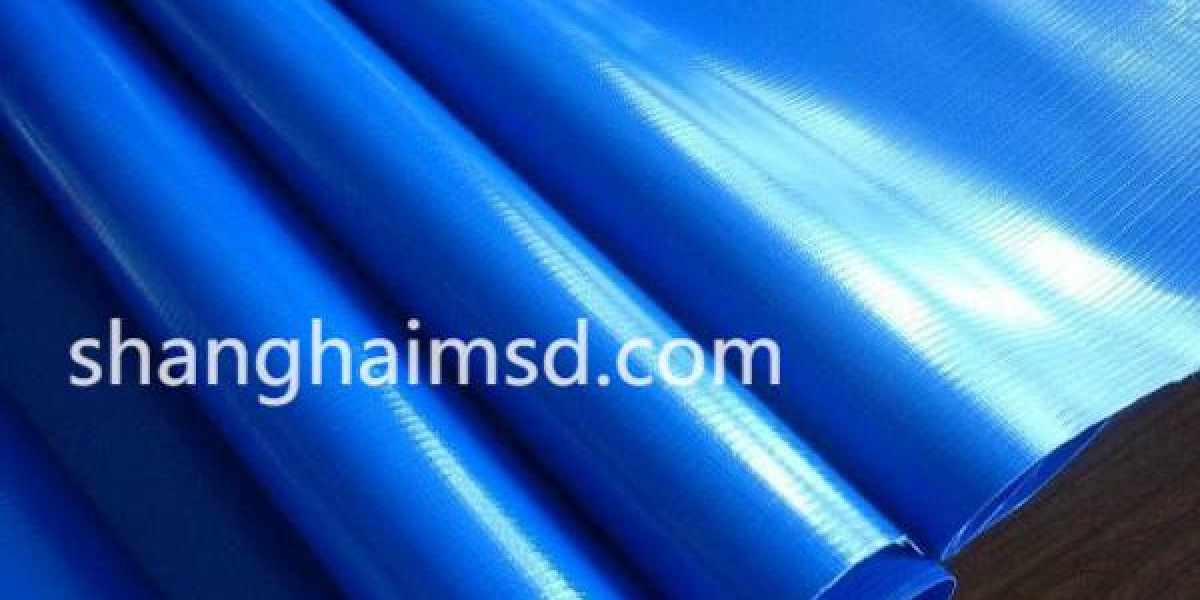

The rapid expansion of inflatable structures across consumer, industrial, and professional markets continues to push manufacturers toward higher standards of safety, strength, and flexibility. These evolving expectations have placed renewed attention on materials like PVC Inflatable Fabric, which plays a central role in product performance due to its adaptability, processing efficiency, and cost-effectiveness. For suppliers such as Shanghai MSD International Trade Co., Ltd., material reliability and consistency have become essential in supporting global customers with solutions tailored to demanding environments.
PVC-based inflatable textiles are engineered by binding plasticized PVC layers onto a reinforced woven base. This composite structure gives the material a unique combination of strength and elasticity. The woven core—often polyester or nylon—manages tensile forces, while the PVC layers resist abrasion, impact, and moisture. This interaction between substrate and coating determines most of the functional characteristics manufacturers rely on, including dimensional stability, seam strength, and long-term durability under repeated inflation cycles.
From a processing standpoint, the coating method significantly shapes overall performance. Knife coating, for example, enables precise control over coating thickness, supporting applications that require weight-sensitive formulations. Calendering, on the other hand, produces smoother, more uniform surfaces, which are advantageous when air retention and airtight seam welding are top priorities. These methods also influence the material’s thermal properties, a crucial factor for automated high-frequency welding and heat-sealing procedures widely used in today’s production workflows.
As inflatable products continue to diversify, the range of required performance characteristics has grown accordingly. In water sports, resistance to UV light and saltwater corrosion is critical. Inflatable boats, paddleboards, and floating platforms must withstand constant exposure to sunlight and high mechanical stress. In contrast, rescue equipment like inflatable tents and rapid-deployment medical shelters require rapid inflation capability, puncture resistance, and low-temperature flexibility. These varied requirements have influenced Shanghai MSD’s approach to product development, encouraging the company to offer multiples grades and finishes to meet different industry standards.
Testing protocols further validate these performance attributes. Air pressure retention tests assess the material’s ability to maintain structural integrity under prolonged load, often simulating hours or even days of continuous inflation. Tear resistance measurements evaluate how quickly small punctures or cuts propagate under stress—an essential indicator for products subjected to abrasive environments. Chemical exposure testing helps manufacturers determine long-term behavior when materials contact oils, fuels, or disinfectants. Each of these evaluations contributes to more reliable inflatable designs, ensuring safety and minimizing long-term maintenance issues.
One area that has significantly influenced design choices is the growing demand for lightweight construction. While traditional heavy-gauge PVC fabrics remain essential for marine applications, newer formulations target mobility-focused products such as inflatable camping gear, portable docks, and temporary signage. These lightweight versions are produced with reduced coating mass and optimized weaves to balance portability with structural strength. Manufacturers like Shanghai MSD have responded by broadening their portfolio with multi-functional fabrics that maintain airtightness while improving ease of handling.
In specialized industrial settings, flame-retardant and antimicrobial versions have also gained relevance. Inflatable medical chambers, clean-room partitions, and industrial spill-containment berms require materials that meet specific regulatory requirements. Such specialized coatings must undergo rigorous certification to confirm compliance with flame propagation, hygiene safety, and static resistance standards. Custom-engineered PVC formulations enable these products to serve high-risk environments without compromising structural performance or ease of processing.
Color stability and surface finish are two additional areas where PVC-coated fabrics excel. Outdoor entertainment products—such as inflatable arches, signage balloons, and festival structures—often incorporate vibrant colors that must endure extended sun exposure. Manufacturers can apply UV-stabilized pigments directly into the PVC coating, producing long-lasting visual clarity. Matte and glossy finishes are also controllable through formulations and processing temperatures, giving designers broader aesthetic flexibility.
Looking toward the future, sustainability is becoming increasingly influential in material selection. While PVC remains difficult to replace in high-strength inflatable applications, ongoing improvements in plasticizer chemistry and recycling processes have produced more environmentally conscious alternatives. Some product lines now incorporate partially recycled substrates or low-VOC coating systems. Suppliers like Shanghai MSD continue to monitor material technology advancements to integrate options that support both performance and environmental responsibility where feasible.
Across all of these developments, the role of reliable supply chains cannot be overstated. Whether supporting small consumer brands or large industrial users, Shanghai MSD International Trade Co., Ltd. emphasizes quality consistency, documentation accuracy, and timely delivery—three critical components in manufacturing sectors that depend on predictable performance under variable conditions. More insights into PVC inflatable materials and their evolving applications can be found at https://www.shanghaimsd.com/news/industry-news/pvc-inflatable-boat-fabric-the-core-material-that-make-inflatable-boats-stronger.html .