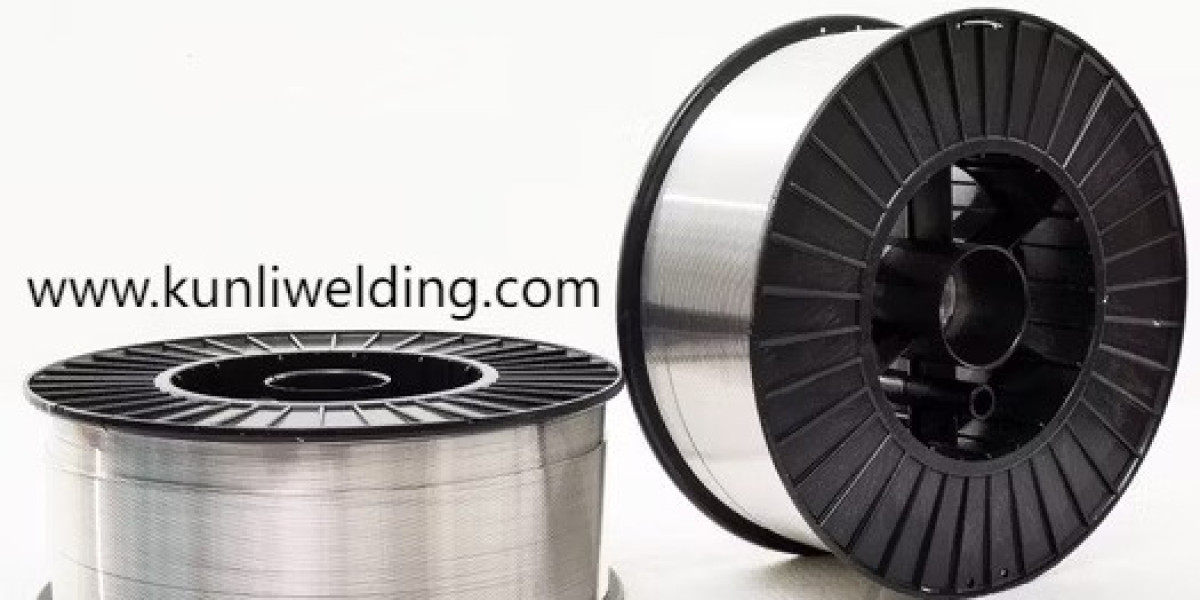

Aluminum fast ferries now slice through waves at speeds that demand mirror-smooth hulls, while offshore platforms and chemical tankers require welds that look clean from day one. Appearance is no longer just cosmetic; drag, coating life, and fatigue performance all start with the bead profile sitting on the surface. Aluminum Welding Wire ER5183 earns its place on critical marine projects largely because its carefully balanced fluidity turns difficult 5083 and 5454 joints into something that barely needs touching after the torch passes.
Lower-alloy wires often fight the thick oxide on marine-grade plate. The molten pool balls up, refuses to wet the toes, and freezes into high, rope-like reinforcement that catches water and accelerates corrosion. ER5183 behaves differently from the first millimeter. Controlled magnesium and trace elements lower surface tension just enough for the puddle to spread rather than sit. The bead lays flat, crowns stay low, and toes feather gently into parent metal without undercut or overlap.
Thicker plate magnifies the difference. Ten-millimeter and heavier 5083 conducts heat slowly, giving ordinary wires time to pile up before solidifying. The result shows up as proud, uneven caps that grinders chase for hours. The enhanced flow characteristics of ER5183 keep the pool alive longer without excessive heat, letting gravity and surface tension produce a naturally smooth surface even on twenty-millimeter ring flanges and tanker barrel seams.
Vertical-up welding on superstructure panels reveals another advantage. Standard wires either run downhill into icicles or freeze into narrow, convex beads. ER5183 maintains a manageable shelf that welders can steer upward, building uniform leg length and concave fillets that blend perfectly into the plate. Crew-boat sides and offshore module walls emerge from the welding bay ready for immediate coating.
Robotic lines building long stiffener runs benefit most dramatically. Programmers push travel speed for productivity, but ordinary wires leave rippled, wavy surfaces at higher velocities. The stable fluidity window of ER5183 lets robots fly while still depositing mirror-like beads that reflect the laser tracker lines underneath. Wind-tower sections and ferry deck panels arrive at the paint booth with almost no dressing required.
Root passes on butt joints tell a similar story. Clean, slightly concave roots with full sidewall fusion come naturally because the puddle wets ahead of the arc instead of chasing it. Less root grinding means fewer opportunities to remove metal that belongs there, preserving throat thickness and fatigue classification.
Internal tanker welds face the toughest visual standard. Food-grade and chemical barrels undergo camera inspection after every trip. Rough or high beads trap cleaning solution and breed cracks. ER5183 produces internal fillets so smooth that rinse water sheets off completely, satisfying the strictest hygiene and corrosion auditors.
Yacht builders chasing perfect brightwork notice the finish even before anodizing. The low crown and blended toes accept polishing compound evenly, eliminating the dull halo that cheaper wires leave around every weld. One pass with the buffer and the joint disappears.
Painters see the savings first. Smooth beads accept high-build epoxy with minimal fairing compound. Coating thickness stays uniform, extending service intervals on hulls that live in salt water. Less fairing compound also means less weight, an equation ferry operators and platform designers never ignore.
Anyone fighting bead appearance on marine 5xxx alloys can examine actual weld samples at kunliwelding.com. The site displays close-up photographs of fillet, butt, and lap joints executed with Aluminum Welding Wire ER5183 across the full range of plate thickness and welding positions typical of modern shipyard and offshore work. When the next aluminum project demands welds that look finished the moment the shielding gas stops, the visual proof and parameter examples waiting at www.kunliwelding.com turn ordinary beads into the kind that make projects stand out long after launch.