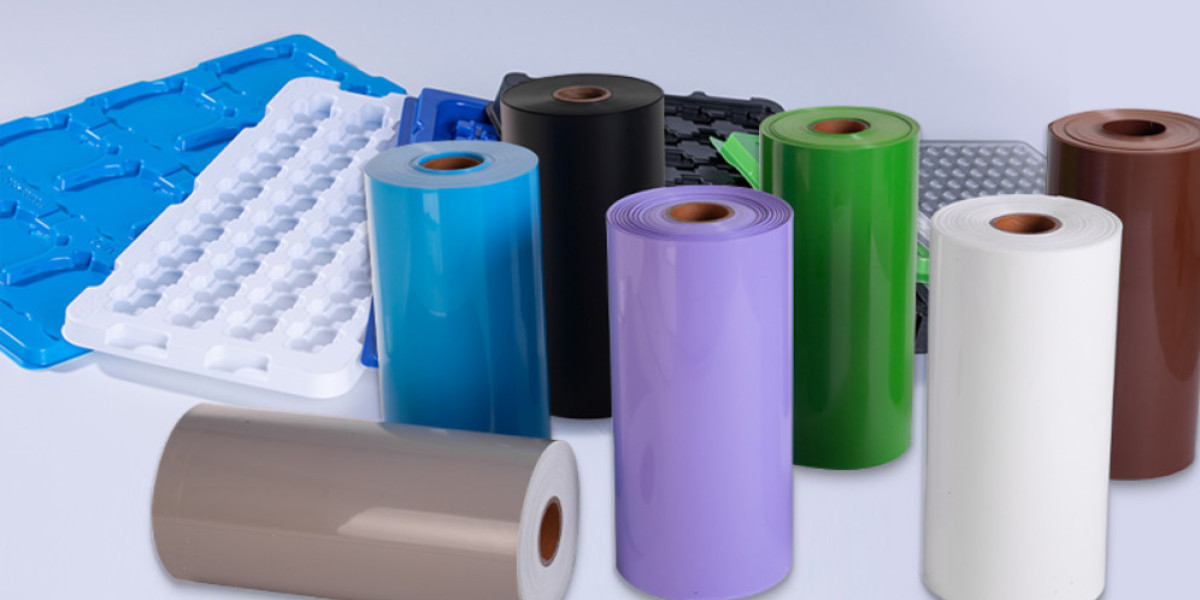

When engineers and product designers first start working with materials like PS Black Conductive and Clear Antistatic PS, they often encounter challenges related to processing, surface performance, and consistency. Understanding these common issues can help reduce trial-and-error cycles during production.
One key area of concern is achieving uniform dispersion of conductive or antistatic additives throughout the polymer matrix. In conductive polystyrene compounds, conductive fillers such as carbon black or nanotubes must be evenly distributed to form a conductive network. If dispersion is poor, surface resistivity can vary significantly across a batch, leading to inconsistent ESD properties in the final product. This challenge is particularly noticeable in extrusion and thermoforming processes where temperature gradients can impact the flow and distribution of additives.
Surface resistivity is a frequent topic of questions among users. The desired resistivity range depends on specific applications — for example, ESD-sensitive packaging may require lower surface resistivity than basic antistatic trays. Users often wonder how much conductive masterbatch to blend with PS resin to meet target values. Adjusting this ratio is essential, but overloading with fillers can affect mechanical properties and processability, creating a balancing act that requires testing and iteration.
Another concern arises with Clear Antistatic PS materials where optical quality is important. Transparency can be compromised if antistatic agents are not properly compatible with the base resin. Users often share feedback about haziness or loss of clarity in final products, which is why choosing the right additive chemistry and matching it to the processing window is critical.
Environmental factors such as humidity also play a role. Some antistatic additives work by drawing moisture to the surface, which can improve surface conductivity. However, in dry environments, this mechanism may be less effective, leading to questions from users about static performance variations under different operational conditions.
Finally, users frequently ask about long-term stability. Additives that migrate or degrade over time can reduce antistatic performance, leading to dust attraction or ESD risks during service life. Understanding polymer-additive interactions and choosing materials with stable antistatic behavior can help address this concern.