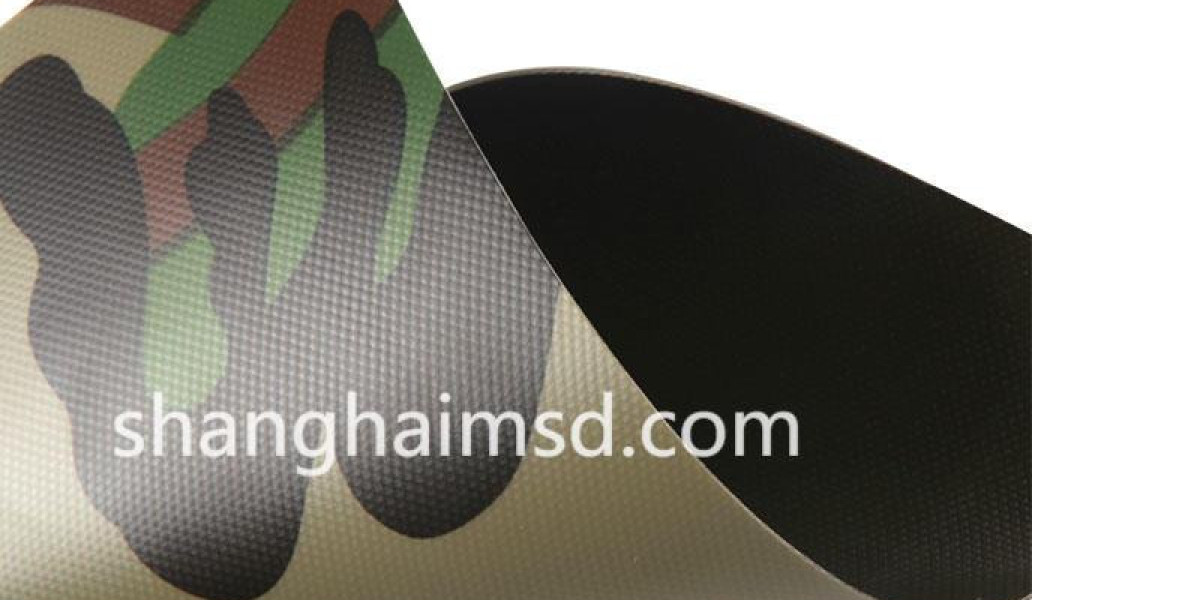

In recent years, inflatable products have evolved from novelty items into engineered systems used in demanding environments, and during this transition PVC Inflatable Fabric has become a core material choice because it allows designers to balance air retention, structural stability, and manufacturing efficiency within a single composite solution. Unlike conventional coated textiles, inflatable materials must function as both a load-bearing surface and a pressure vessel, which places unique demands on material formulation and process precision.
At the material level, inflatable PVC fabrics are typically composed of a woven or knitted base cloth combined with flexible polyvinyl chloride layers. The base fabric provides tensile strength and dimensional stability, while the PVC coating ensures airtightness and surface protection. Polyester is often selected as the reinforcement due to its predictable elongation behavior under load, which is critical when internal air pressure fluctuates. The interaction between the yarn structure and the PVC compound determines how the material responds to inflation cycles, folding stress, and long-term use.
Processing methods play a decisive role in shaping final performance. Calendering and knife coating are two commonly used techniques, each offering different advantages. Calendering allows precise control over coating thickness and surface smoothness, which is important for products requiring visual consistency and controlled weight. Knife coating, on the other hand, enables stronger penetration of PVC into the textile substrate, enhancing bonding strength for applications where seam reliability is essential. Selecting the right process is less about preference and more about aligning with the product’s pressure requirements and service conditions.
Seam formation is another defining aspect of inflatable fabric engineering. High-frequency welding, hot-air welding, and solvent bonding are widely used, but each method interacts differently with the PVC formulation. For example, high-frequency welding requires a dielectric response within the PVC compound, while hot-air welding depends on thermal softening behavior. Material suppliers must therefore tailor plasticizer types and stabilizer systems to ensure compatibility with the intended joining technology. Poor alignment between material chemistry and welding method can lead to seam creep or micro-leakage over time.
Application diversity further drives material differentiation. Inflatable boats demand resistance to saltwater, UV exposure, and mechanical abrasion, while inflatable shelters prioritize flame retardancy and dimensional stability under temperature variation. Recreational inflatables focus on surface feel, color retention, and safety compliance. These varied requirements mean that inflatable PVC fabrics are rarely standardized; instead, they are engineered through targeted adjustments to coating formulation, fabric density, and surface finish.
Testing protocols are designed to simulate real-world stresses rather than isolated material properties. Air retention tests evaluate pressure loss over extended periods, revealing micro-defects invisible to visual inspection. Peel strength tests measure the bond between PVC layers and the textile substrate, providing insight into coating adhesion quality. Dynamic fatigue testing, involving repeated inflation and deflation cycles, helps predict service life and identifies potential failure points before products reach the market.
Environmental and regulatory considerations increasingly influence material development. Restrictions on certain plasticizers and stabilizers have encouraged manufacturers to adopt alternative formulations that maintain flexibility without compromising compliance. This shift requires careful recalibration of processing parameters, as new additives can alter melt behavior, surface energy, and welding response. Suppliers with strong technical expertise are better positioned to guide downstream manufacturers through these transitions without disrupting production stability.
Within this context, Shanghai MSD International Trade has positioned itself as a sourcing and solution-oriented partner rather than a simple material distributor. By coordinating with upstream producers and understanding downstream application needs, the company supports customization in coating thickness, fabric construction, and performance testing. This integrated approach helps manufacturers shorten development cycles and reduce the risk of mismatched material specifications.
The ongoing refinement of inflatable materials continues to blur the line between textiles and engineered membranes. As inflatable structures expand into professional, commercial, and emergency-use scenarios, material selection becomes a strategic decision tied to safety, durability, and lifecycle cost. For readers seeking a deeper technical overview of inflatable PVC material fundamentals and industry perspectives, additional insights are available through Shanghai MSD’s dedicated resource page at https://www.shanghaimsd.com/news/what-is-pvc-inflatable-fabric-everything-you-need-to-know.html .