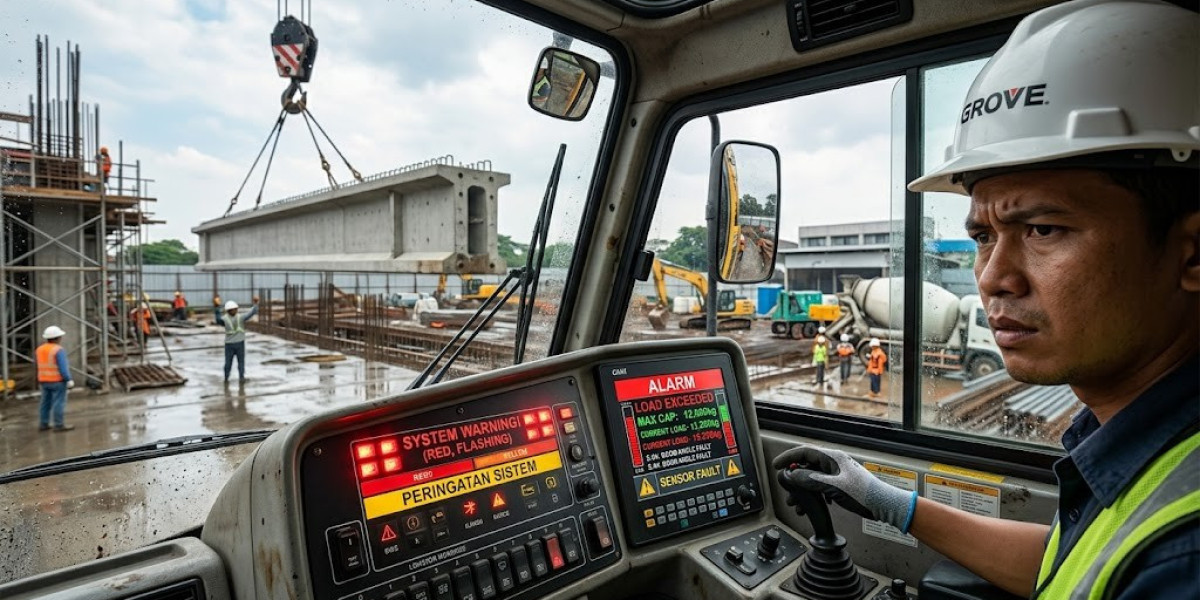

It plays out on job sites everywhere. The cooling tower section is rigged and ready. The rigging crew is in position. But the Grove crane won't budge—its safety system has locked out all functions, displaying urgent fault codes across the monitor. With each passing minute, the schedule slips and tension rises. In this pressure-cooker moment, someone suggests a quick sensor bypass to get the lift completed. But this shortcut leads to consequences that can never be reversed.
These electronic protection systems aren't bureaucratic hindrances designed to slow production. They embody decades of engineering evolution and painful lessons learned from accidents. Disabling them doesn't solve operational problems; it transforms manageable situations into potentially lethal crises. The few hours potentially saved could cost someone their future. This isn't about blind rule-following. It's about understanding why every sensor exists and recognizing that tampering with them crosses an unacceptable line.
The Technology of Protection
Modern Grove cranes deploy intricate sensor networks that continuously monitor operational safety. The Load Moment Indicator functions as the central processing unit, analyzing real-time data from boom angle sensors, length measurement devices, and hydraulic pressure transducers. This constant stream of information enables immediate calculations of whether current lifting configurations remain within established safety margins.
The anti-two-block system provides critical parallel protection, monitoring the spatial relationship between hook block and boom tip to prevent catastrophic contact that causes instant cable failure and uncontrolled load release. These systems operate as an integrated whole. When any single sensor transmits corrupted information, the entire safety calculation becomes unreliable. The LMI might indicate safe conditions when the crane is actually approaching dangerous structural limits. Without these technological safeguards, operators depend entirely on visual judgment and experience—resources that prove tragically inadequate when precision matters and consequences are severe.
The Rationalization Process
Understanding why technicians bypass sensors helps prevent the behavior. Construction equipment operates in brutal environments. Electronic components fail unexpectedly. Moisture infiltrates sealed housings. Physical impacts damage delicate elements. Wiring harnesses chafe and fatigue from constant vibration. When these failures trigger protective lockouts, the resulting downtime creates crushing pressure on crews facing impossible deadlines.
Maintenance personnel sometimes convince themselves that temporary workarounds are acceptable—jumper wires across connectors, resistors installed to simulate normal readings, or alarm circuits simply disconnected. They promise themselves they'll fix it properly tomorrow. Others deal with sensors that seem to cry wolf repeatedly, triggering alarms during normal operations. Rather than investigating root causes like calibration drift or environmental interference, they permanently silence the warnings.
These rationalizations share a dangerous foundation: the belief that human attention can replace engineered safety margins. But human focus fluctuates. Distractions occur. Complacency develops over time. The disabled sensor removes the protection designed specifically to catch these inevitable human limitations before they become accidents.
The Devastating Aftermath
The immediate physical risks are severe and extensively documented. Without functional anti-two-block protection, operators can inadvertently raise hooks until wire ropes fail, sending multi-ton loads plummeting toward ground personnel. Without accurate LMI data, cranes tip over—sometimes gradually, sometimes with catastrophic speed. These incidents fill OSHA files, insurance claim records, and news reports.
The aftermath brings crushing secondary consequences. Post-accident investigations always examine safety system integrity. Discovery of tampered sensors triggers immediate insurance claim denials. Regulatory citations carry penalties that escalate rapidly. Criminal charges for reckless endangerment or manslaughter follow when negligence causes injury or death. Personal liability extends to every individual who touched the bypass, from the technician who installed it to the supervisor who knew about it.
Equipment protection matters equally. Safety systems safeguard the crane's structure as much as its operators. Operating without load monitoring subjects booms, cables, and hydraulics to overload stresses. The resulting damage often remains hidden, developing as progressive metal fatigue and microscopic cracks that propagate silently until sudden failure during routine operations. Emergency structural repairs or complete boom replacement cost vastly more than maintaining proper inventory of Grove crane parts.
Methodical Troubleshooting Protocol
Many apparent sensor failures actually stem from connection, calibration, or environmental factors rather than hardware defects. Equipment vibration gradually loosens electrical connections. Environmental exposure corrodes contact surfaces. Temperature extremes affect electronic performance. Before condemning a sensor—or worse, implementing dangerous bypasses—technicians must execute thorough basic diagnostics.
Clean all connectors with appropriate contact cleaners. Inspect entire cable runs for pinch points, abrasion, or damage near moving parts. Verify harness integrity at articulation points where continuous flexing occurs. Check sensor mounting for physical looseness or damage affecting readings.
Calibration errors frequently cause system faults. Boom angle sensors drift from baseline, causing the LMI to generate incorrect calculations or persistent error codes. Manufacturer-specified recalibration procedures often resolve these without parts replacement. System resets sometimes clear transient faults. Only when exhaustive diagnostics fail should hardware replacement be considered. Experience shows most monitoring issues are electrical, not mechanical.
Quality Replacement Standards
Eventually, sensors reach end-of-life. Continuous thermal cycling, vibration, and environmental exposure degrade electronics beyond recovery. When testing confirms hardware failure, replacement is mandatory. Internal repair attempts on sealed sensors rarely succeed long-term.
Component quality directly impacts safety. Generic alternatives may fit and cost less, but their electrical specs often deviate from originals. Variations in resistance, signal output, or response characteristics cause intermittent faults or inaccurate readings. For safety systems, these differences are unacceptable. Genuine Grove crane parts match original parameters precisely, ensuring reliability and accuracy.
The Value of Strong Supplier Relationships
Parts availability drives maintenance decisions. When critical sensors face long lead times, pressure for improper workarounds becomes intense. This highlights the strategic value of a responsive crane parts supplier.
Strong crane parts supplier relationships transform procurement from crisis to routine. Good suppliers track failure patterns, inventory high-demand items, and understand component revisions. Providing complete serial numbers ensures correct part specification, as manufacturers frequently update sensors during production. Transparent communication about lead times enables proper planning. When items are constrained, quality suppliers suggest approved alternatives that maintain safety without requiring bypasses.
Building a Safety-First Culture
Technical and logistical solutions are incomplete without cultural foundation. Operators and technicians need both authority and obligation to ground equipment immediately when safety systems fault.
This requires visible management commitment. When leadership consistently demonstrates that safety system integrity trumps production schedules—every time—teams internalize these values. They report problems promptly. They wait for proper Grove crane parts from their crane parts supplier rather than implementing dangerous fixes. This culture protects everyone: operators, ground crews, equipment, and the organization itself.
The Bottom Line
Bypassing safety sensors trades temporary convenience for permanent risk. No deadline, budget, or operational pressure justifies compromising these protections. When sensors malfunction, diagnose systematically. When they fail, replace with quality components.
Source authentic Grove crane parts for system integrity. Partner with a reliable crane parts supplier for rapid availability. But never bypass safety systems. Time saved cannot justify consequences in human cost, legal exposure, and equipment damage. Maintain active monitoring. Maintain accuracy. Maintain safety commitment. These define true professionals.