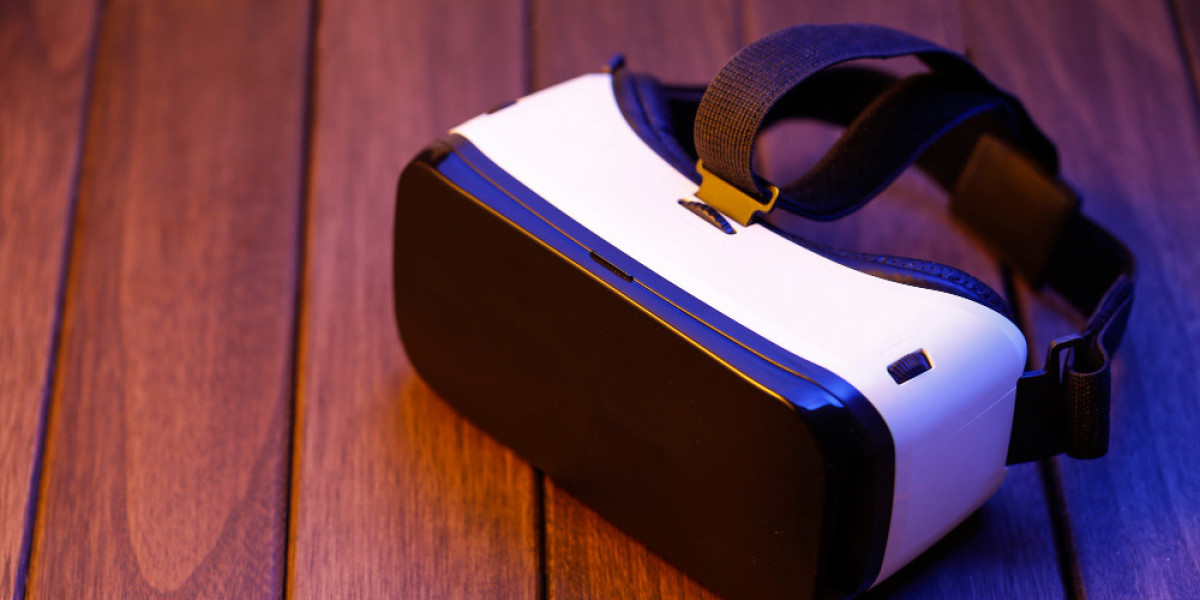

In the quest to make Virtual Reality (VR) and Mixed Reality (MR) headsets smaller, lighter, and more comfortable, the Pancake optical module has emerged as the industry's most significant breakthrough. For years, VR headsets were bulky due to thick Fresnel lenses. Today, the "Pancake" design allows manufacturers to compress the optical path, bringing the display much closer to the eye without sacrificing image quality.
At ARVR Optical, we specialize in the high-precision manufacturing and alignment of these sophisticated modules. This guide explores the technical mechanics, benefits, and industrial applications of Pancake optics for both new buyers and expert engineers.
What is a Pancake Optical Module?
The Pancake optical module is a "folded" optical system. It gets its name because the lenses are thin and stacked closely together, similar to a stack of pancakes.
Standard lenses require a long distance between the display and the lens to focus the image. The Pancake module uses polarization-based light folding. Light from the micro-display (usually a Micro OLED or Fast-LCD) bounces back and forth between several optical elements before reaching the user's eye. This effectively "folds" a long focal length into a very short physical space.
How Pancake Optics Work: The Science of Polarization
The secret to the Pancake design lies in how it manages light waves. A typical module from ARVR Optical consists of:
A Circular Polarizer: Attached to the display to prepare the light.
A Half-Mirror (Beam Splitter): Which reflects part of the light and lets part of it pass through.
A Quarter-Wave Plate (QWP): Which changes the polarization state of the light as it passes through.
By changing the polarization state, the light is forced to reflect off the internal surfaces of the lens stack multiple times. By the time the light exits the lens and enters the eye, it has traveled the necessary distance to be in focus, even though the lens stack itself is only a few millimeters thick.
Key Technical Advantages
For industry experts and B2B buyers, the move toward Pancake optical modules is driven by several performance benchmarks:
Massive Reduction in Size: Pancake modules can reduce the thickness of a headset’s optical stack by over 50% compared to traditional Fresnel lenses.
Edge-to-Edge Clarity: Fresnel lenses often suffer from "god rays" (streaks of light) and blurring at the edges. Pancake optics provide a much larger "sweet spot" with consistent sharpness across the entire field of view.
Ghosting Suppression: Through advanced thin-film coatings, ARVR Optical minimizes internal reflections, ensuring high contrast and deep black levels.
Diopter Adjustment: The design of Pancake modules makes it easier to integrate adjustable focus, allowing users to use the headset without prescription glasses.
Technical Performance Matrix
| Feature | Traditional Fresnel Lens | Pancake Module (ARVR Optical) |
| Module Thickness | 40mm - 60mm | 15mm - 25mm |
| Weight | Heavy | Ultra-Lightweight |
| Image Sharpness | Center-focused | Uniform (Edge-to-Edge) |
| Visual Artifacts | High (God rays/Circles) | Low (Clean image) |
| Light Efficiency | High (~90%) | Lower (~10-25%) |
Addressing the Efficiency Challenge
While the Pancake optical module is superior in form factor, it has one major technical trade-off: Light Efficiency. Because the light is folded and polarized multiple times, a significant portion of the brightness is lost.
At ARVR Optical, we solve this challenge by pairing our Pancake modules with ultra-high-brightness displays. By using Micro OLED panels that can output thousands of nits, we ensure that the final image reaching the user's eye is still vivid and bright, even after the light-folding process.
Industrial and Professional Applications
Beyond gaming, the Pancake module is transforming professional sectors:
1. Medical Training and Surgery
Surgeons use VR/MR for pre-operative planning. A slim, lightweight headset powered by Pancake optics allows them to wear the device for hours without neck strain, providing the high resolution needed to view intricate anatomical structures.
2. Aerospace and Flight Simulation
Pilots require extreme peripheral clarity to monitor cockpit instruments and the external horizon simultaneously. The edge-to-edge sharpness of the ARVR Optical Pancake module is essential for realistic, high-fidelity flight simulation.
3. Engineering and 3D Design
Architects and automotive engineers use "Digital Twins" to visualize projects. The lack of visual artifacts in Pancake optics ensures that straight lines in a CAD model appear straight and undistorted in the virtual world.
Why Partner with ARVR Optical?
Manufacturing a Pancake optical module is significantly more difficult than producing standard lenses. It requires nanometer-scale precision in coating and alignment.
ARVR Optical offers:
Precision Polarization Coating: Our in-house facility applies multi-layer coatings that are essential for the light-folding process.
Automated Alignment: We use AI-driven robotic assembly to ensure that the multiple lens elements are perfectly centered, eliminating "binocular rivalry" or eye strain for the end user.
B2B Scalability: We provide customized optical stacks for OEMs, moving from initial optical design to mass production with 16+ years of industry experience.
Conclusion
The Pancake optical module is the foundation of the "Slim VR" era. By elegantly solving the problem of headset bulk while improving image clarity, it has become the gold standard for high-end wearables.
At ARVR Optical, we are committed to pushing the limits of what is possible in near-eye optics. Whether you are a consumer electronics brand or a specialized industrial firm, our Pancake modules provide the clarity, comfort, and technical performance your project demands.
Visit arvroptical.com today to view our latest technical data sheets or to consult with our expert optical engineers.