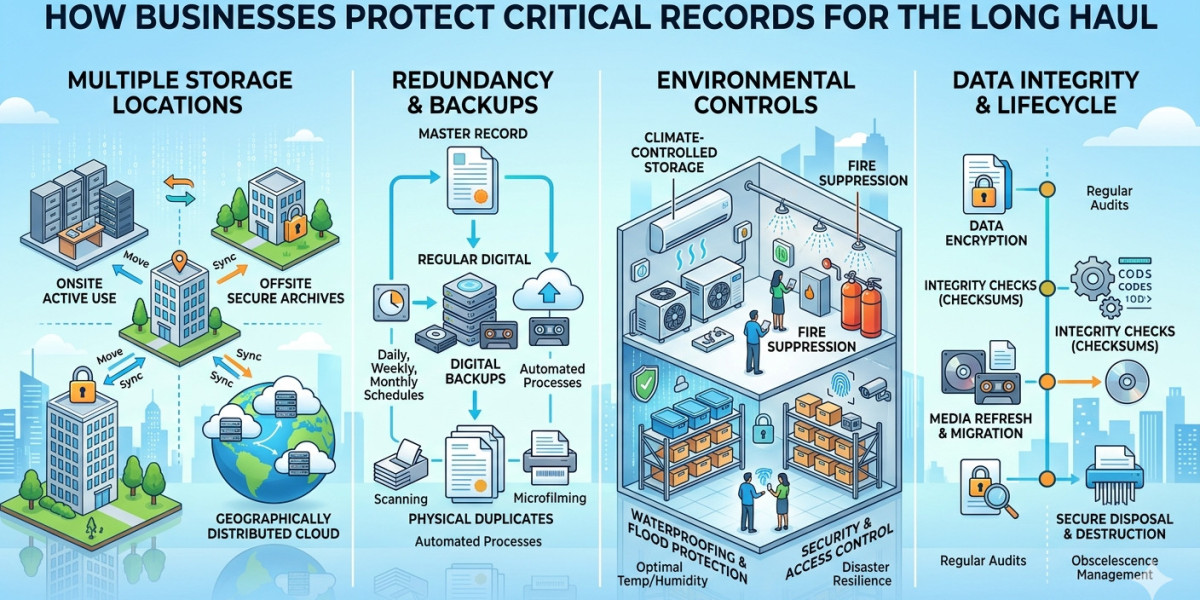

Every organization generates records that must remain accurate, accessible, and defensible for years. Financial data, contracts, compliance documents, and internal communications all carry long-term value. The challenge is not just keeping these records but ensuring they remain usable as systems evolve and regulations tighten. This is where professional archive solutions come into play, helping businesses maintain control over their most important information.
Why long-term record protection gets complicated
On paper, archiving sounds simple. Save the files, keep them secure, and retrieve them later. In reality, business records do not stay static. File formats change, regulations shift, systems get replaced, and teams create documents in inconsistent ways. Over time, what once looked organized starts to break down.
Many businesses face a familiar issue. Critical records still exist, but they are scattered, locked in outdated systems, or missing the metadata needed to verify authenticity. A document that cannot be traced or retrieved quickly loses its value when it is needed most.
The problem becomes more serious in regulated industries. Financial records, contracts, and employee data often need to be preserved for years with full traceability. That requires more than basic storage.
What professional archive solutions actually do
Professional archive solutions are designed to preserve records in a structured and reliable way. They do more than store files. They maintain context, enforce rules, and support long-term accessibility.
A strong system begins with classification. Records are organized by type, purpose, and retention requirements. This structure ensures that documents remain searchable and meaningful over time.
Retention management is equally important. Different records have different lifespans. Some must be kept for compliance, while others should be removed to reduce risk. A structured system enforces these policies consistently.
Security also plays a central role. Archived records often contain sensitive information. Access must be controlled, and every interaction should be tracked. Audit trails and role-based permissions ensure that data remains trustworthy.
Where basic storage methods fall apart
Many organizations still rely on standard storage tools for long-term records. These tools may work initially, but they rarely scale well.
Shared folders often become disorganized. Files are duplicated, naming conventions vary, and structure depends on individual users. Over time, this leads to confusion and inefficiency.
Backups are often misunderstood. They are designed for recovery after system failure, not for structured retrieval or compliance. Using them as an archive creates gaps in governance.
Legacy systems introduce another layer of risk. Important records stored in outdated platforms become harder to access as technology changes. Maintaining these systems adds cost without improving usability.
A more durable way to manage records
Organizations are shifting toward structured and automated approaches to archiving. Instead of treating it as a final step, archiving is integrated into the document lifecycle.
Automation improves consistency. Records are classified, tagged, and stored according to predefined rules. This reduces errors and ensures that data remains usable over time.
Modern platforms like Docbyte support this approach by combining structured archiving with compliance-focused workflows. Records remain accessible without relying on outdated systems.
Interoperability also matters. Systems that integrate with other platforms allow data to move securely without duplication or loss of context.
Why this matters beyond compliance
Compliance often drives archiving decisions, but the benefits extend further. A structured archive improves operational efficiency by making information easier to find and use.
It also reduces risk. Properly stored records are less likely to be lost, misused, or exposed. This strengthens data governance across the organization.
Cost efficiency improves as well. Businesses spend less time managing outdated systems or searching for information. Over time, this creates a more stable and scalable data environment.
Records represent the institutional memory of a business. Keeping that memory accurate and accessible is essential for long-term success.