
Beneath the painted steel and operator cab of every Terex RT crane lies a hydraulic universe most people never contemplate. Fluid courses through passages at pressures sufficient to lift tons, directed by valves machined to tolerances measured in thousandths of an inch. Seals flex and hold, cycle after cycle, year after year. This system asks remarkably little in return—clean fluid, effective filtration, and the discipline to service both before failure demands it. The reward for that discipline is decades of reliable performance. The penalty for neglect is written in repair invoices and idle equipment.
The rationalization for deferred maintenance is seductive and familiar. The crane feels fine. The schedule is unforgiving. The maintenance budget has competing priorities. But hydraulic systems don't negotiate. Filter restriction increases progressively, forcing pumps to generate higher pressures at greater energy cost and thermal load. Fluid chemistry drifts toward instability, losing the protective properties that prevent metal-to-metal contact. The eventual failure isn't sudden—it's the culmination of countless ignored signals, each one a warning that could have prevented the outcome.
From Design Intent to Operational Truth
Terex engineers invest thousands of hours validating maintenance intervals. These aren't arbitrary numbers—they're calculated baselines. For RT series cranes, hydraulic filters typically require service every 500 to 1,000 operating hours. Fluid replacement generally occurs at 2,000-hour intervals or annually. These figures assume moderate temperatures, clean air, and duty cycles within design parameters.
Construction sites specialize in violating assumptions. Desert operations generate fine particulate that loads filters in weeks. Coastal environments push salt-laden moisture past every seal and breather. Continuous production schedules sustain fluid temperatures that accelerate chemical breakdown. When operating reality exceeds design envelopes, maintenance intervals must contract. The hour meter counts time; your observations interpret what that time has cost the system. Both inform effective decision-making.
Learning the Filter's Vocabulary
Filters communicate through symptoms when words fail them. This vocabulary isn't complex, but it requires attention:
- Warning lamps that illuminate without obvious operator cause
- Hydraulic functions that feel labored, slow, or imprecise
- Pump noise that transitions from background to foreground
- Filter housings that radiate heat beyond normal operating temperature
- Removed elements coated in sludge, varnish, or metallic debris
Most Terex RT models equip filter heads with differential pressure gauges. These instruments compare pressure before and after the element, measuring flow resistance. When the needle sweeps into the red, the filter is choked and approaching bypass. Replacement is immediate—not after the shift, not after the current lift. A bypassing filter becomes a contamination distributor, routing unfiltered fluid carrying accumulated particulate directly to pumps, valves, and cylinder seals. The abrasive action of this fluid destroys precision clearances progressively and often invisibly.
Treat every removed filter as a diagnostic specimen. Cut it open. Spread the pleats. Examine the media under good lighting. Bright metallic glitter means something internal is grinding itself apart—perhaps a pump approaching failure, perhaps a valve spool scoring its bore. Thick brown varnish means the fluid has been thermally abused, cooked past its chemistry's limits. These post-mortems convert a routine $40 service into intelligence worth thousands in prevented downtime.
Interrogating Fluid Condition
Hydraulic fluid doesn't volunteer its condition—it must be asked through observation and testing. Age and hours are poor interrogators; visual, sensory, and analytical methods extract the truth.
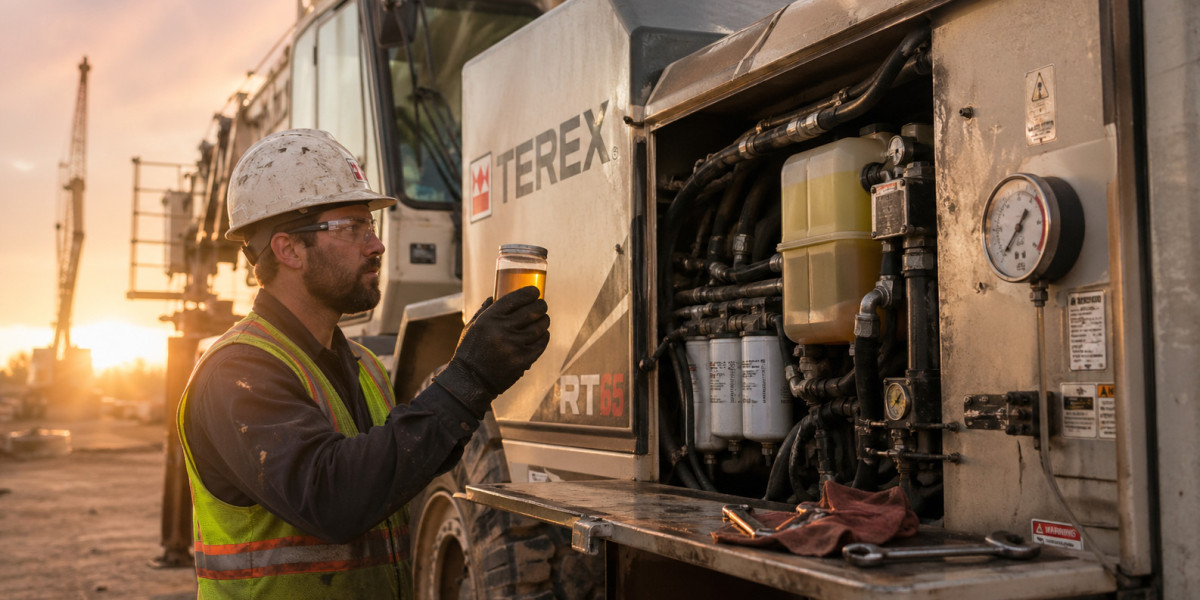
Pull a sample into a clean, clear container and hold it to daylight. Fresh fluid glows amber and transmits light cleanly. As degradation progresses, color deepens toward brown or black—oxidation and contamination staining the base stock. Cloudiness, milkiness, or visible water droplets mean moisture has invaded, destroying lubricating films and starting rust on precision surfaces you cannot see until they fail.
Smell the sample deliberately. Normal fluid carries a mild, familiar petroleum scent. Overheated fluid assaults with a sharp, acrid punch—the smell of antioxidant sacrifice and base oil breakdown. This odor means the fluid can no longer protect what it lubricates. Replacement is mandatory, but so is understanding why. Inspect coolers for debris blockage. Review load charts for overcapacity picks. Investigate duty cycles for excessive continuity. Fix the thermal source or the replacement fluid follows the same destructive path.
For definitive assessment, submit samples to an oil analysis laboratory. They count particles by size class, measure water content with precision, and track wear metals and additive elements through spectroscopy. The resulting report transforms maintenance from calendar-driven guesswork into data-driven precision. Extend intervals confidently when numbers support it. Compress them aggressively when degradation outpaces the schedule.
Fortifying Against Contamination
Servicing filters and fluid treats existing contamination. Excluding contamination prevents it from forming in the first place. Industry research is unambiguous: most hydraulic failures begin with external contamination entering through inadequately protected openings.
The reservoir breather is a small component with an outsized responsibility. Inspect it weekly. It must breathe freely and seal completely. A clogged breather chokes air exchange and can pull a vacuum strong enough to damage seals or collapse filter elements. A cracked or missing breather is an open door for dust, pollen, and atmospheric moisture. Replace it proactively; its cost is negligible compared to any component it protects.
Run a gloved hand along exposed cylinder rods. They should feel like polished glass. Any scratch, any pit, any corrosion spot is a seal-killer in waiting. Every retraction drags that defect through the rod seal, cutting it, letting contamination into the system behind it, and eventually creating external leakage that announces itself with puddles and environmental liability. Polish minor damage. Replace severely compromised rods. Never ignore what tactile inspection reveals.
Treat every system opening as a sterile procedure. Clean fittings with lint-free material before wrenching them loose. Cap every open line the instant it separates. Pour fluid only from sealed containers through clean, dedicated funnels. An open five-gallon bucket in a construction environment collects more contamination than fluid volume. Respect for system cleanliness returns dividends in extended component life and reduced failure frequency.
Override Events That Shatter Routine
Standard intervals govern normal operations. Certain occurrences override every schedule and demand immediate, complete fluid replacement:
- After any catastrophic pump, motor, or valve failure. The debris from that destruction doesn't stay localized. It tours the entire hydraulic circuit, embedding in valve lands, scoring cylinder barrels, seeding the next failure. Complete evacuation and replacement is non-negotiable.
- Following water contamination. Whether from seal failure, condensation, or pressure washing, water initiates corrosion that compounds with every heat cycle. Even small percentages dramatically accelerate wear rates.
- After repeated overheating events. Each thermal spike burns off additives faster than the last, leaving fluid increasingly unable to protect components.
- When changing fluid types or brands. Incompatible chemistries can form sludge, gel, or aggressive acids when mixed, obstructing orifices and destroying pumps.
Never introduce fresh fluid without simultaneous filter replacement. The mathematics are unforgiving: clean oil plus dirty filter equals contaminated oil in minutes. Replace suction strainers, pressure filters, and return elements as a coordinated set. Double-check micron ratings against specifications. Too coarse and harmful particles slip through. Too fine and flow restriction starves components or triggers premature bypass.
Quality verification matters at every replacement point. Genuine Terex crane parts carry engineering validation for flow rates, filtration efficiency, and bypass valve settings. Aftermarket filters that mimic external dimensions may harbor critical internal differences—different media density, different pleat counts, different valve springs. A bypass pressure set even slightly below specification means unfiltered flow every cold morning. The apparent savings evaporate with the first major component replacement.
A specialized crane parts supplier provides insurance against specification traps. They maintain current cross-reference databases tied to model year and serial number. Terex updates filter designs between production runs more frequently than generic catalogs reflect. The right supplier catches these evolutions and ships components that actually fit and function as designed. They also guide you on fluid specifications, system capacities, and any model-specific quirks that could trip you up.
Rituals That Build Reliability
The most effective maintenance program is the one that happens automatically, without heroic effort or constant willpower. Build simple rituals into daily operations until they become unconscious habit.
Pre-start walkarounds take five minutes. Check the sight glass or dipstick. Scan the ground beneath the crane for fresh leaks. Start the engine and listen to the pump for thirty seconds before engaging any hydraulic function. Note anything different from yesterday's established normal.
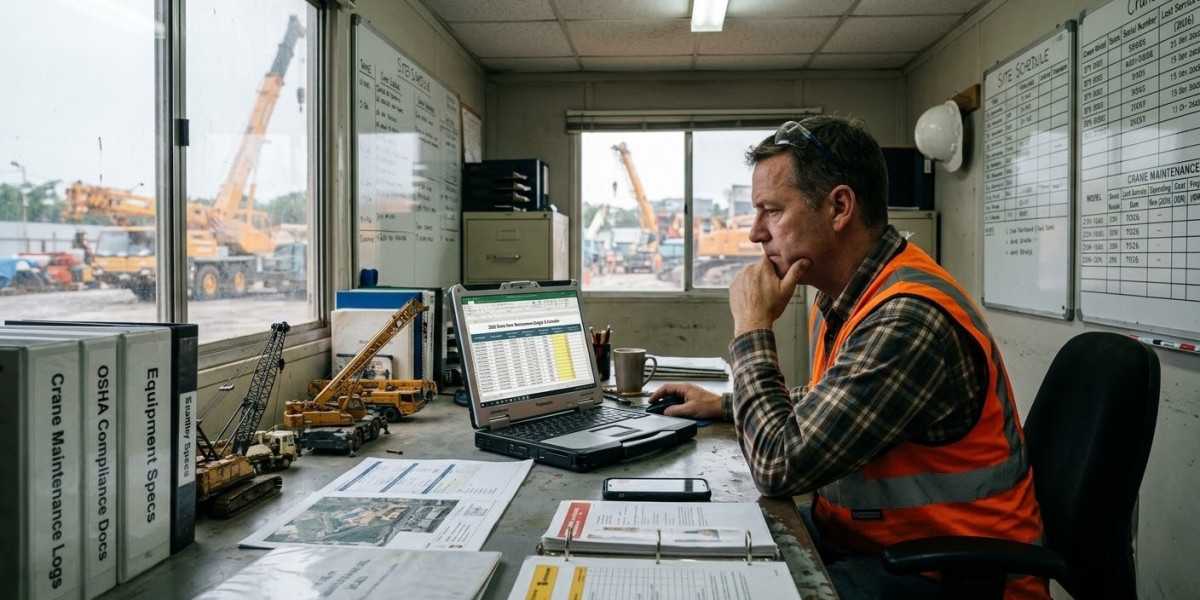
Keep service records in whatever format you'll actually use—a notebook, a spreadsheet, a maintenance app. Log every filter change, every fluid replacement, every operator observation of sluggish response or unusual heat. Six months of consistent records reveals patterns. Summer operations load filters faster than winter. Heavy-lift weeks darken fluid quicker than light-duty periods. These patterns let you customize intervals to your actual work instead of operating on generic assumptions that may not fit your reality.
Empower your operators as diagnostic partners. They know this crane's personality intimately. They feel when the boom hesitates or the outrigger creeps. Create a culture where reporting "something feels different" triggers immediate investigation, not dismissal. The operator who mentions sluggish hydraulics over morning coffee might prevent an afternoon failure that strands a critical lift and disrupts project schedules for days.
The Hard Truth
Hydraulic maintenance is invisible when done right and catastrophic when neglected. There's no photo opportunity in changing a filter. No one writes press releases about clean oil analysis results. But neglected hydraulics generate their own headlines—through crane downtime, missed deadlines, repair invoices that make accountants wince, and safety incidents that damage reputations and relationships.
Don't treat the operator's manual as immutable scripture written in stone. Use your eyes actively. Use your nose deliberately. Use your hands respectfully. Control contamination at every possible entry point. Insist on genuine Terex crane parts for every replacement need. Build a relationship with a crane parts supplier who understands the difference between shipping a box and solving a maintenance problem.
Your Terex RT crane was engineered to lift heavy loads in tough conditions for thousands of hours. Its hydraulic system is the muscle that makes everything else possible. Keep that muscle clean, cool, and properly nourished with quality filtration and fresh fluid. That's how you transform a capital purchase into a revenue generator that earns its keep reliably, year after year, project after project.