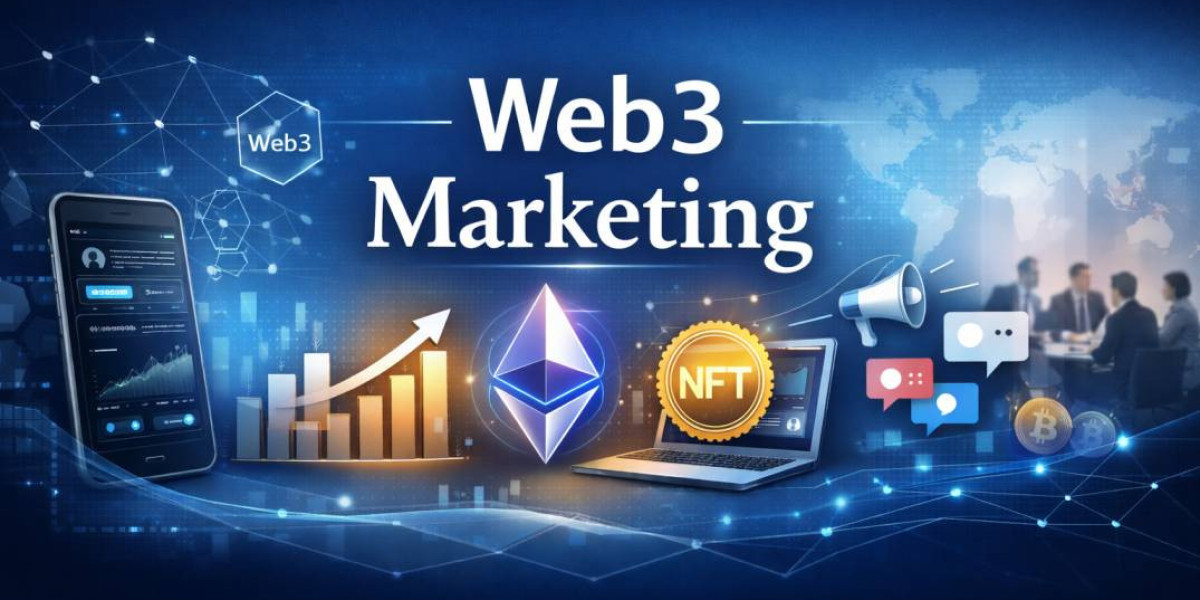

Web3 marketing has completely changed the way brands connect with audiences. Unlike traditional digital marketing, where businesses mainly focus on paid ads and centralized platforms, Web3 projects depend heavily on communities to drive adoption, trust, engagement, and long-term sustainability. Whether it is a DeFi platform, NFT marketplace, GameFi ecosystem, AI-powered blockchain protocol, or meme coin project, the strength of the community often determines whether the project succeeds or disappears. In the decentralized ecosystem, users are not just customers; they become contributors, investors, ambassadors, validators, creators, and decision-makers. This shift makes community growth one of the most critical aspects of Web3 marketing.
Many successful crypto and blockchain projects have grown from small online groups into billion-dollar ecosystems by implementing smart community growth hacks. These strategies go beyond ordinary social media promotions and focus on creating engagement loops, incentivized participation, token-driven interactions, exclusive access systems, and user-generated advocacy. Communities in Web3 thrive when members feel ownership, transparency, and belonging. As competition in the crypto space increases in 2026, projects are aggressively experimenting with innovative methods to attract and retain active users.
This blog explores the most effective community growth hacks used in Web3 marketing today. From airdrops and ambassador programs to meme marketing and DAO participation, these strategies help projects scale rapidly while building loyal communities that actively contribute to ecosystem growth.
Building a Strong Brand Narrative Before Community Launch
One of the biggest growth hacks in Web3 marketing is creating a powerful brand narrative before launching the community itself because users in the crypto ecosystem usually connect emotionally with visions, missions, and movements rather than products alone. Successful Web3 brands create stories around decentralization, financial freedom, creator empowerment, gaming ownership, AI integration, or digital identity, allowing people to feel they are joining a larger revolution instead of merely using a platform. Projects that establish a compelling narrative early often attract highly engaged members organically through discussions on social media, Reddit, Telegram, Discord, and X because people enjoy sharing meaningful ideas that align with their beliefs and aspirations.
Leveraging Airdrops to Accelerate User Acquisition
Airdrops remain one of the most powerful community growth strategies in Web3 marketing because they incentivize users to engage with projects in exchange for token rewards, creating immediate interest and participation. Projects typically distribute free tokens to users who complete tasks such as joining Discord servers, following social media pages, inviting friends, testing products, or participating in governance activities, which rapidly expands community size while simultaneously increasing awareness across multiple platforms. Successful airdrop campaigns also create viral momentum because users actively share opportunities with others, leading to exponential organic growth and stronger brand visibility within the crypto ecosystem.
Using Discord as the Core Community Hub
Discord has become the backbone of Web3 community management because it enables projects to create structured, highly interactive ecosystems where members can communicate in real time through segmented channels, live events, voice discussions, AMAs, and gamified activities. Projects that effectively organize Discord communities with dedicated moderators, role systems, reward structures, educational channels, and multilingual support often experience stronger retention rates because users feel continuously involved and valued. Advanced Discord automation tools also help Web3 brands manage onboarding processes, engagement tracking, NFT verification, and participation rewards efficiently, turning casual visitors into active community contributors.
Creating Viral Meme Marketing Campaigns
Meme marketing has become one of the fastest-growing community growth hacks in Web3 because crypto audiences heavily engage with humor-driven, relatable, and shareable content across X, Telegram, Reddit, and Instagram. Successful projects often encourage their communities to create memes around token launches, market trends, project updates, or competitor comparisons, generating organic visibility without relying entirely on paid advertising. Meme campaigns work especially well because they build emotional engagement, improve brand recall, and allow communities to feel directly involved in spreading project awareness, often resulting in millions of impressions through decentralized user participation.
Launching Ambassador and Advocate Programs
Ambassador programs are highly effective in Web3 marketing because they transform passionate community members into active promoters who contribute to content creation, moderation, referrals, event participation, and regional expansion efforts. Instead of relying solely on centralized marketing teams, projects empower loyal users with rewards, exclusive access, governance privileges, NFTs, or token incentives to represent the brand within their own networks and local communities. This decentralized growth model significantly improves authenticity because users trust recommendations from fellow community members more than traditional advertisements, making ambassador-driven marketing a scalable and cost-effective growth strategy.
Gamifying Community Engagement
Gamification is widely used in Web3 communities because it increases participation by making engagement entertaining, competitive, and rewarding for users. Projects implement systems such as XP points, leveling structures, leaderboard competitions, NFT badges, staking rewards, referral rankings, and quest-based campaigns to encourage continuous interaction across community channels. This approach works exceptionally well because it taps into human psychology by rewarding consistency, recognition, and achievement, ultimately keeping members active for longer periods while strengthening emotional attachment to the ecosystem.
Hosting Interactive AMA Sessions
Ask Me Anything sessions, commonly known as AMAs, are a proven growth strategy in Web3 marketing because they create direct communication between project founders and community members, increasing transparency and trust. Crypto users often want detailed explanations about tokenomics, roadmap plans, utility models, partnerships, and future updates before supporting a project, making AMAs essential for reducing uncertainty and improving investor confidence. Projects that host regular live discussions on Discord, Telegram, X Spaces, and YouTube typically build stronger credibility because active communication demonstrates commitment, accountability, and openness.
Collaborating With Crypto Influencers
Influencer collaborations continue to dominate Web3 marketing because crypto influencers already have highly targeted audiences that trust their opinions, reviews, and investment insights. Projects strategically partner with influencers for token launch promotions, NFT showcases, tutorial videos, community competitions, podcast discussions, and social media campaigns to attract new users quickly. The effectiveness of influencer marketing in Web3 comes from its ability to create instant exposure and social proof, especially when influencers actively participate in project communities rather than simply posting sponsored content.
Rewarding Early Supporters With Exclusive Access
Exclusive access systems are highly effective for community growth because they create scarcity, excitement, and loyalty among early adopters who want unique benefits within emerging ecosystems. Web3 projects often reward initial supporters with early token allocations, whitelist spots, governance privileges, premium NFTs, beta access, staking multipliers, or private community memberships, encouraging users to engage before public launches. This strategy not only drives early traction but also strengthens long-term retention because community members feel recognized for their early contributions and commitment.
Building Referral Programs With Token Incentives
Referral marketing is a powerful growth engine in Web3 because users are financially incentivized to invite new participants into the ecosystem through token-based reward systems. Projects commonly offer bonuses for successful signups, wallet connections, staking activities, NFT purchases, or trading volumes generated through referral links, creating a self-sustaining growth loop driven by community participation. Referral campaigns work particularly well in crypto because users naturally share earning opportunities within their networks, accelerating adoption while minimizing customer acquisition costs.
Creating Educational Content for Community Expansion
Educational marketing is one of the most sustainable community growth hacks because the Web3 ecosystem remains highly complex for mainstream audiences who need guidance before participating confidently. Successful projects create tutorials, explainers, webinars, infographics, blogs, video courses, and beginner-friendly social media threads to simplify blockchain concepts, token utility, governance systems, and ecosystem features. By educating users instead of only promoting products, projects establish trust and authority while attracting audiences genuinely interested in learning and long-term participation.
Encouraging User-Generated Content
User-generated content plays a major role in Web3 marketing because communities become significantly stronger when members actively contribute discussions, tutorials, memes, videos, podcasts, artwork, and promotional campaigns. Projects that reward creators with tokens, NFTs, leaderboard recognition, or ambassador roles often experience higher engagement because community members feel personally invested in ecosystem growth. This decentralized content creation model also expands brand reach organically as users distribute project-related content across multiple social platforms and online communities.
Leveraging DAO Participation for Community Ownership
Decentralized Autonomous Organizations, or DAOs, are one of the most innovative community growth mechanisms in Web3 because they allow users to participate directly in governance decisions through voting systems and proposal discussions. When community members feel they have influence over project development, treasury allocation, partnerships, or ecosystem improvements, engagement levels increase dramatically because users develop a stronger sense of ownership and responsibility. DAO participation transforms passive audiences into active stakeholders, making communities more loyal and collaborative over time.
Organizing Community Contests and Challenges
Contests and challenges are highly effective in increasing engagement because they combine competition, rewards, creativity, and social sharing into a single growth strategy. Web3 projects frequently organize trading competitions, meme contests, NFT design challenges, referral races, content creation tournaments, and scavenger hunts to motivate community participation. These events create excitement and urgency while encouraging users to invite others, share project content, and remain active within community platforms for longer durations.
Utilizing NFT Utility for Community Building
NFTs have evolved beyond digital collectibles and are now widely used as community-building tools within Web3 ecosystems because they provide ownership, exclusivity, and identity to users. Projects often use NFTs as membership passes, governance access tokens, event tickets, loyalty rewards, or staking assets, encouraging users to participate more actively in community activities. NFT-based communities also foster stronger emotional connections because users identify themselves as part of exclusive groups that share common interests, values, or investment goals.
Running Multi-Platform Social Campaigns
Successful Web3 marketing strategies rarely rely on a single platform because crypto audiences are spread across Discord, Telegram, X, Reddit, YouTube, LinkedIn, TikTok, Farcaster, and emerging decentralized social networks. Projects that maintain consistent branding, messaging, and engagement across multiple platforms significantly increase visibility and audience reach while reducing dependence on centralized algorithms. Multi-platform campaigns also allow brands to target different audience segments effectively, from traders and investors to developers, gamers, creators, and institutional participants.
Using Scarcity and FOMO Strategically
Fear of missing out, commonly called FOMO, remains a major psychological driver in Web3 marketing because users often respond quickly to limited-time opportunities, exclusive launches, and scarce digital assets. Projects strategically use countdowns, limited NFT mints, whitelist deadlines, staking windows, and early-bird incentives to create urgency and accelerate participation. While overusing FOMO tactics can damage credibility, balanced scarcity strategies can effectively boost engagement, conversions, and community activity during critical growth phases.
Building Partnerships With Other Web3 Communities
Cross-community collaborations are highly valuable in Web3 because blockchain ecosystems often thrive through partnerships, integrations, and shared user bases rather than isolated competition. Projects collaborate with NFT collections, DeFi platforms, gaming ecosystems, AI protocols, launchpads, and DAOs to host joint events, token swaps, co-branded campaigns, and collaborative AMAs that expose communities to new audiences. These partnerships create network effects that increase visibility, trust, and user acquisition opportunities for all participating ecosystems.
Implementing Real-Time Community Support
Providing fast and reliable community support is an underrated but highly impactful growth hack because users in crypto often require immediate assistance regarding wallets, staking, token transactions, security concerns, and onboarding processes. Projects that maintain responsive moderators, multilingual support teams, automated bots, FAQ channels, and live assistance systems create better user experiences, reducing frustration and improving retention rates. Effective support systems also strengthen trust because communities feel the project genuinely cares about user success and security.
Tracking Community Analytics for Smarter Growth
Data-driven decision-making is essential for scaling Web3 communities because projects need to understand which strategies generate the highest engagement, retention, and conversion rates. Successful marketing teams analyze metrics such as Discord activity, Telegram engagement, social mentions, wallet growth, referral performance, event participation, and content reach to optimize campaigns continuously. By identifying user behavior patterns and community preferences, projects can refine their marketing strategies, personalize engagement efforts, and allocate resources more efficiently.
The Role of AI in Modern Web3 Community Growth
Artificial intelligence is increasingly transforming Web3 marketing because AI-powered tools help projects automate moderation, personalize engagement, analyze sentiment, generate content, identify influencers, and optimize campaign performance at scale. AI chatbots can provide instant responses within communities, while predictive analytics tools help marketers identify emerging trends and user behaviors before competitors. As Web3 ecosystems become more complex and competitive, integrating AI into community management strategies will likely become a standard growth practice for forward-thinking blockchain projects.
Why Consistency Matters More Than Virality
Although viral campaigns can generate massive short-term attention, sustainable community growth in Web3 usually depends on consistent engagement, communication, and value delivery over time. Many projects experience temporary hype during token launches or NFT drops but fail to maintain activity because they stop interacting with users once the initial excitement fades. Successful Web3 brands consistently publish updates, host events, reward participation, improve products, and maintain transparency, ensuring that communities remain active even during difficult market conditions.
Conclusion
Community growth is the foundation of successful Web3 marketing because decentralized ecosystems rely heavily on active participation, trust, and collective engagement rather than traditional advertising alone. The most effective growth hacks combine incentives, storytelling, gamification, education, influencer collaboration, user ownership, and consistent interaction to create communities that genuinely support long-term ecosystem development. From airdrops and DAO participation to meme marketing and NFT utility, Web3 projects now have access to highly innovative strategies capable of driving rapid adoption while building strong emotional connections with users.
As the blockchain industry continues evolving in 2026, projects that prioritize authentic community-building over short-term hype will likely achieve the greatest success because loyal communities become the driving force behind adoption, liquidity, advocacy, and innovation. Businesses entering the Web3 space must understand that growth is no longer just about acquiring users; it is about empowering communities to become active contributors within decentralized ecosystems. Companies like Blockchain App Factory are helping Web3 brands implement advanced crypto marketing and community-building strategies that accelerate adoption and create sustainable ecosystem growth in an increasingly competitive blockchain landscape.