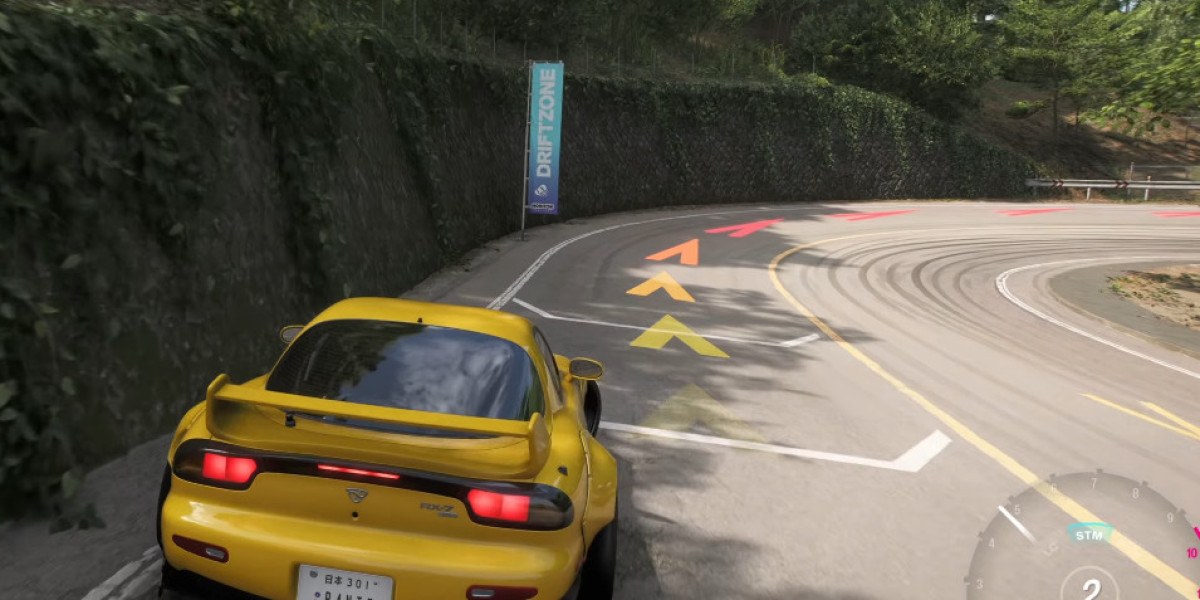

When you are tearing down a narrow mountain touge or navigating a tight urban street circuit, raw horsepower becomes secondary. Success is entirely determined by your vehicle's footprint, weight transfer, and steering geometry. If your car is too heavy or has the turning radius of a cargo ship, a tight 180-degree hairpin will destroy your lap times or break your drift streak.
To dominate technical corners, you need cars engineered specifically to rotate on a dime. Let's look at the absolute best platforms for handling tight hairpins, backed by real performance numbers, tuning dynamics, and real-world racing geometry.
1. The Lightweight Kings: Minimal Inertia
The physics of a hairpin are simple: the less mass you carry into the braking zone, the less work your tires have to do to change your direction.
Mazda MX-5 Miata (NA / Gen 1)
There is a reason the first-generation Miata is a staple of technical driving. Weighing in at just about 2,100 lbs (950 kg) from the factory, its rotational inertia is incredibly low.
The Math: Because its weight distribution sits at a near-perfect 50:50, the polar moment of inertia is minimized. This means it requires very little effort to initiate a turn.
Hairpin Strategy: In tight corners, you can carry brake pressure deep into the apex—a technique known as trail braking. This keeps weight on the front tires, compresses the front springs, sharpens the steering angle, and lets the rear swing around smoothly without washing out.
Honda Beat / Suzuki Cappuccino (Kei Cars)
If a Miata feels nimble, a mid-engine Kei car like the Honda Beat feels like a cheat code. Clocking in at less than 1,700 lbs (770 kg) with an incredibly short wheelbase of roughly 90 inches (2,280 mm), it can carve lines through hairpins that normal sports cars cannot physically physically fit into. You do not even need to slide; its tiny footprint allows it to maintain a tight racing line while keeping momentum high.
2. Balanced RWD Legends: Mechanical Rotation
When dealing with tight corners, a rear-wheel-drive platform with a naturally balanced chassis allows you to use the throttle to help steer the car.
Hairpin Apex Geometry:[Approach] ---> [Trail Brake / Load Front] ---> [Apex / Rotate Rear via Throttle] ---> [Exit]Nissan Silvia (S13 / S14 / S15)
The Silvia chassis—famous for its MacPherson strut front suspension and multi-link rear setup—provides excellent steering clarity.
The Numbers: When modified with a high-angle drift suspension, the steering lock can increase from a standard 35 degrees to well over 55 degrees.
Hairpin Strategy: This massive steering angle prevents spinning out during extreme rotations. On tight switchbacks like Mount Haruna, you can pitch the car into a hard slide early, use the rear wheel spin to rotate the chassis 180 degrees, and use the high steering lock to pull yourself straight out of the corner.
3. Advanced AWD Stability: Clawing Out of the Apex
Rear-wheel drive is great for pivoting, but all-wheel drive is unmatched when you need to put power down on the exit of an incredibly sharp turn.
Mitsubishi Lancer Evolution / Subaru WRX STI
Traditional AWD cars suffer from understeer in tight corners because the front tires are trying to both turn and pull the car at the same time. However, rally-bred legends counter this with advanced differentials.
The Tech: Systems like Mitsubishi's Active Yaw Control (AYC) actively pump torque to the outside rear wheel during a turn.
The Result: If you enter a hairpin in a Lancer Evo, the car will automatically overdrive the outside wheel, forcing the rear end to swing around and eliminate understeer. This allows you to stand on the throttle much earlier than a RWD car could manage.
Technical Setup: Tuning for Hairpins
If your favorite car is struggling with tight switchbacks, you can adjust your suspension and alignment variables to make it significantly more agile:
| Tuning Parameter | Adjustment | Why it Helps |
| Front Toe | Toe-Out (0.1° to 0.3°) | Sharpens initial turn-in response |
| Rear Differential | High Deceleration Lock | Stabilizes the car under heavy braking |
| Rear Anti-Roll Bar | Stiffen | Makes the rear break traction easier to pivot |
| Brake Bias | Shift Rearward (51-53%) | Helps settle the nose and rotate the rear |
Mastering these tight spaces takes patience and a deep understanding of your platform's limits. For drivers looking to source rare setups or find unique, pre-tuned collector builds optimized for technical touge routes, keeping an eye on external marketplaces like U4N can give you a massive competitive edge. Finding highly optimized fh6 exclusive festival cars for sale ensures you have a garage fully capable of handling any tight hairpin the road throws at you.
4. The Short-Wheelbase Wildcard: Alpine A110
If you want modern performance without the weight penalty of standard supercars, the modern Alpine A110 is a masterclass in hairpin design. Weighing roughly 2,400 lbs (1,100 kg) with a mid-engine layout, the bulk of its weight sits directly behind the driver's cabin. When entering a hairpin, the mid-engine layout causes the car to act like a pendulum; a quick flick of the steering wheel initiates rotation instantly, allowing you to square off the corner and accelerate away cleanly.